
Ascension: Deckbuilding Game
Playdek, Inc.Card
3.72.74K Reviews
- Version
- 2.5.3
- Installs
- 500.00K
- Age Rating
- Everyone
Screenshots

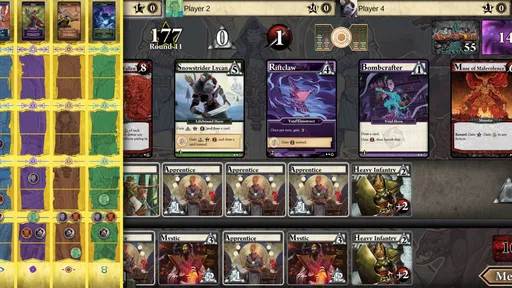
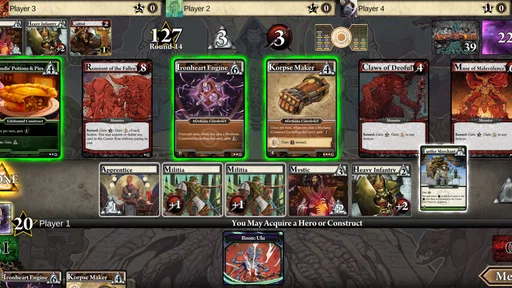
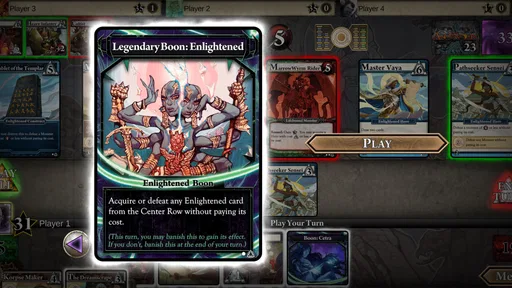
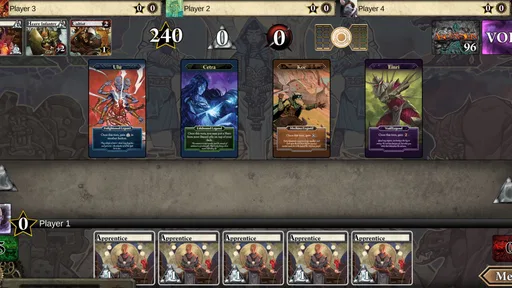
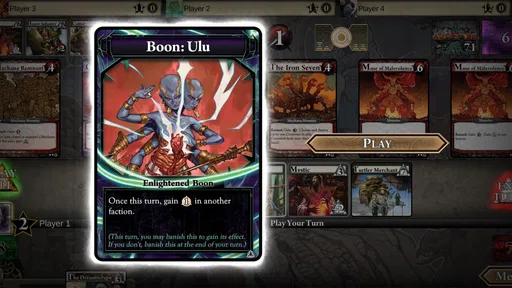

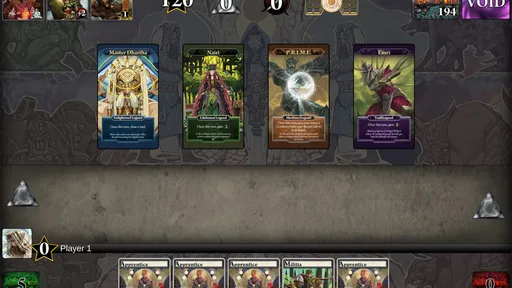
Our Review of Ascension: Deckbuilding Game
 Analysis by Appyee
I usually approach digital deckbuilders with one question: will I still want to open the game after the first few exciting sessions? Ascension: Deckbuilding Game makes a good early impression because it turns the familiar card-game loop into something I can play in short bursts, while still giving me decisions that matter. It is a free card game from Playdek, Inc., rated for Everyone, and it has built a sizeable audience with over 500 thousand installs.
That audience size matters less to me than the way the game fits into ordinary life. I can play when I have a few quiet minutes, stop thinking about it, and return later without needing a long setup. At the same time, it is not simply a passive time-filler. The central appeal comes from deciding which cards are worth buying, which threats deserve attention, and when a temporary advantage is worth sacrificing a stronger long-term deck.
The important question is whether that loop has enough depth to survive beyond the novelty of the first week. My answer is qualified but positive: this is a worthwhile choice for people who enjoy experimenting with card combinations and making repeated tactical decisions. It is less convincing for anyone looking for a highly social card game, a quick puzzle with a clear ending, or an experience that feels completely fresh every time.
Why the first week feels so inviting
The opening sessions are easy to understand without being completely shallow. You begin with a modest deck and gradually improve it by acquiring more useful cards. That basic structure is familiar to anyone who has played a modern deckbuilding game, but Ascension gives the process enough movement to keep each turn interesting. The available cards change, opponents create pressure, and I am constantly weighing immediate rewards against the shape I want my deck to take later.
What I like most during the first week is that mistakes are informative. If I buy too many cards that look powerful on their own, the deck can become unfocused. If I spend too much effort removing threats, I may fall behind in building the resources needed for the next stage. Those consequences teach the game naturally. I do not need a long tutorial lecture to understand that a strong card is not automatically the right card at that moment.
The game also works well in the small gaps of a day. A realistic use case is a commute or a coffee break when I want something more engaging than scrolling but do not have the time or concentration for a long strategy game. A single session can provide a complete mental exercise without requiring me to organize a group of friends. That convenience is one of its strongest practical advantages over physical card games.
New players should pay attention to deck discipline from the beginning. Buying every card that seems attractive creates a larger deck, but not necessarily a better one. I found it more useful to think in terms of a clear plan: choose cards that support one another, avoid filling the deck with weak purchases, and treat every turn as a chance to improve future draws rather than merely collect the biggest immediate reward.
That advice is especially useful because early excitement can hide a subtle problem. The game presents enough interesting choices to make experimentation enjoyable, but not every experiment produces a smooth or powerful deck. Losing because a plan failed can be satisfying when I understand why it failed; losing because my deck became inconsistent can feel more like administrative cleanup. Learning to recognize that difference determines whether the first week feels like discovery or repetition.
The learning curve rewards attention rather than memorization
I would not describe the game as difficult to start, but becoming consistently good requires more than memorizing strong cards. Timing matters. A card that is excellent in one situation may be awkward when the available market or board pressure changes. I gradually became more careful about preserving flexibility, especially when I was unsure whether the next few turns would favor an aggressive or economical approach.
That makes the game a good fit for players who enjoy incremental improvement. Each match gives me something to review: whether I bought too early, whether I ignored a useful combination, or whether I allowed a short-term threat to dictate the entire game. The learning is not dramatic or cinematic; it is the quieter satisfaction of making fewer careless decisions over time.
People who prefer immediate spectacle may feel differently. The presentation supports the card game rather than trying to turn it into an action experience. If your ideal mobile game is built around constant animation, rapid rewards, or a large story campaign, this may feel restrained. Its pleasure comes from planning and adaptation, not from visual intensity.
What remains valuable from month to month
The long-term value comes from the fact that a deckbuilder is not solved after one successful strategy. The changing card environment encourages me to adjust rather than follow a single script. Even when the broad objective stays familiar, the route toward it can change depending on what appears and what the other side is doing.
That variability is enough to support a recurring habit, especially for players who enjoy trying to refine their decisions. I can approach one session as an experiment, another as a careful attempt to build a coherent deck, and another as a quick game played without overthinking every choice. The same foundation serves different moods better than many narrowly focused card games.
The Legends Expansion is also part of the current appeal. Its availability gives established players an additional reason to return and revisit the game rather than treating the original card pool as something to exhaust once. I would not recommend buying into extra content simply because it exists, but the expansion direction helps the game feel less like a one-week curiosity for people who already enjoy its core loop.
There is a useful distinction between replayability and lasting value here. Replayability means I can start another match. Lasting value means I still have a reason to do so. For me, that reason is the attempt to make better choices with imperfect information. I enjoy seeing whether a different purchasing pattern produces a more reliable deck, or whether I can respond better when the available options do not support my preferred plan.
Players who need a strong sense of progression may find the month-to-month appeal weaker. A traditional role-playing game gives obvious character growth, while a collectible card game may offer a large collection to pursue. Ascension is more focused on the quality of decisions within each game. If that kind of self-improvement does not motivate you, the repeated matches may begin to look too similar once the basic systems are familiar.
Where it fits beside other card games
Compared with a physical deckbuilding game, the digital version removes the effort of shuffling, tracking effects, and preparing a table. That makes it much easier to play alone or in a short session. The trade-off is that the tactile pleasure of handling cards is gone, and the screen can make the experience feel more like an app than a tabletop evening.
Compared with competitive collectible card games, it feels less dependent on building a personal collection before playing well. That is a major advantage for me when I want to focus on decisions rather than worry about whether my deck is assembled from the newest or strongest options. On the other hand, players who enjoy customizing a permanent deck and expressing a very personal style may find this structure less satisfying.
Compared with simple solitaire card apps, it offers considerably more strategic texture. I am not merely waiting for a lucky arrangement; I am deciding how to shape my resources and respond to pressure. The cost is a higher mental demand. This is not the best choice when I want something I can play while barely paying attention.
How much maintenance the game asks from me
The maintenance burden is fairly light in terms of time, but it is not zero. To keep enjoying the game, I need to remain mentally engaged with its card interactions. Returning after a long break is easy enough, yet I may need a few sessions to recover my sense of timing and remember which kinds of purchases tend to create a coherent deck.
That is a healthier form of maintenance than a game that demands constant daily attention, in my opinion. I do not need to treat every day as an obligation to preserve progress. The game works better as a flexible habit: play when I want a compact strategy challenge, then leave it alone without feeling that I have fallen behind.
The current version is 2.5.3, and the game supports devices running Android 7.0 or later. Those details are practical rather than exciting, but they matter when deciding whether it belongs on an older phone or tablet. On a compatible device, I would still recommend checking how comfortable the card text is to read before committing to long sessions, particularly if you prefer playing on a smaller screen.
Because the game is free to download, the initial barrier is low. In-app purchases range from $0.99 to $9.99 per item, so players should decide early how they want to approach optional spending. I would begin with the free experience and only consider additional content after establishing that the basic loop genuinely fits my habits. That avoids turning curiosity into an unnecessary purchase.
The most useful maintenance habit is to keep sessions purposeful. Instead of opening the game automatically and making rushed choices, I get more value when I enter with a small objective: test a different deck direction, improve my handling of early turns, or simply complete one thoughtful match. This prevents the app from becoming background tapping and helps preserve the strategic appeal.
Where friction starts to show
The average rating is 3.7 from around 17 thousand ratings, with roughly 2.7 thousand written reviews. I read that as a sign of a game with a committed audience but also some meaningful points of friction. It is not a universal recommendation, and my own experience supports that balanced view: the underlying design is appealing, but the format asks for patience from anyone who wants immediate clarity or constant novelty.
One source of fatigue is the repeated focus on optimization. At first, deciding how to improve a deck feels rewarding. After many sessions, the same process can become work if I am not in the mood to evaluate every purchase. The game does not always provide a dramatic change of pace; much of its satisfaction depends on whether I still enjoy examining small advantages.
Another limitation is that a poor early decision can influence the rest of a match. That is strategically fair, but it can feel unforgiving when I am playing casually. A player who wants every game to remain equally comfortable may prefer a simpler card app with less emphasis on building an efficient engine. Here, the consequences of weak choices are part of the appeal and part of the frustration.
The digital format can also make card information feel dense. When several effects compete for attention, I need to slow down and read carefully rather than rely on quick visual recognition. That is manageable for me, but it reduces the game’s suitability for distracted play. If I am watching television or frequently interrupted, I am more likely to miss a useful interaction and blame the interface for a mistake I made through inattention.
There is also a difference between playing for relaxation and playing to improve. The former can work, but only if I accept that some sessions will be mentally active. For pure relaxation, I would choose a gentler solitaire game. For a focused break where I want my brain occupied, this is a much better fit.
Who should make room for it
I recommend it to players who like card games built around gradual improvement, tactical choices, and repeated experimentation. It is particularly suitable for someone who wants a tabletop-style deckbuilder without needing a physical collection or a scheduled group. The free entry point makes it easy to test, and the Everyone rating makes it approachable for a broad audience.
I would also suggest it to experienced card-game players who want a compact alternative to more demanding collectible games. It gives me room to think without asking me to maintain a large personal deck, study a constantly changing competitive scene, or dedicate an entire evening to one session. That narrower focus is a strength when I want strategy without a large surrounding hobby.
I would skip it if my priority is a story-driven adventure, a highly social multiplayer atmosphere, or a game that rewards only a few seconds of attention at a time. I would also hesitate to recommend it to someone who dislikes repeating a core ruleset. The Legends Expansion adds another reason to return, but it does not change the fundamental fact that the game’s appeal rests on playing more deckbuilding matches.
For a first session, I suggest resisting the temptation to judge cards only by their immediate power. Look for combinations, notice how quickly your deck cycles, and pay attention to whether a purchase helps future turns. After that, try one deliberately different approach. The comparison between those sessions will tell you more about the game’s depth than simply winning or losing once.
My long-term verdict
After the first-week novelty fades, Ascension: Deckbuilding Game earns lasting space only when I treat it as a thinking game rather than an endless reward machine. Its recurring value comes from improving judgment, adapting to changing options, and finding cleaner ways to build a useful deck. Those are modest pleasures, but they are durable ones for the right player.
I appreciate that it can fit into everyday gaps without becoming a daily obligation. I can play a focused match, put it down, and return later without needing to rebuild a complicated routine. The free price makes experimentation sensible, while the optional purchases mean I can decide whether the additional content deserves a place in my own play habits.
My main reservation is fatigue. If I am no longer interested in comparing choices or refining a strategy, the game has limited ways to disguise its repeated structure. It will not rescue a player who has already decided that deckbuilding itself feels repetitive. In that situation, a narrative card adventure or a more socially driven game would be a better long-term choice.
For me, though, it remains a solid recommendation for thoughtful short sessions. Playdek, Inc. has built a card game that is approachable at the start and rewarding when I pay attention to the details. The real test is not whether it is fun once, but whether its decisions remain interesting after the first excitement disappears. If you enjoy that kind of gradual mastery, this is a free game worth trying and potentially keeping installed.
Verdict
Strengths of Ascension: Deckbuilding Game
- Strategic deckbuilding offers meaningful choices every turn.
- Card combinations create satisfying synergies and varied playstyles.
- Progression rewards experimentation with different deck strategies.
- Matches are well suited to short mobile gaming sessions.
- Fantasy artwork gives the game a distinctive visual identity.
Limitations of Ascension: Deckbuilding Game
- The rules can feel complex until the card interactions become familiar.
- Random draws may occasionally decide outcomes more than strategy.
- Some cards and mechanics are difficult to evaluate for new players.
- Longer matches can become repetitive when using similar strategies.
- Advanced content may require extra purchases or extended progression.
Other Releases by Playdek, Inc.
View All
Fluxx
Board3.7

D&D Lords of Waterdeep
Board3.8
Similar Picks in This Category
View All
Solitaire - Classic Card Games
MobilityWare4.6

UNO!™
Mattel163 Limited4.3

Spider Solitaire: Card Games
MobilityWare4.6

Solitaire.com - Classic Cards
Tripledot Studios Limited4.7

Plants vs. Zombies™ Heroes
ELECTRONIC ARTS4.1

Hearthstone
Blizzard Entertainment, Inc.4.1
Frequently Asked Questions
What is Ascension: Deckbuilding Game?
Ascension: Deckbuilding Game is a digital adaptation of the popular fantasy-themed deck-building card game. You begin with a basic deck and gradually improve it by acquiring stronger Heroes and Constructs, defeating Monsters, and earning Runes and Honor. Each match focuses on building an efficient strategy, managing resources, and adapting to the cards available in the center row.
How does the gameplay work in Ascension?
At the start of a game, your deck contains relatively weak cards that generate Runes or combat power. During each turn, you use Runes to recruit cards and power to defeat Monsters, then place the acquired cards into your discard pile. Your deck is reshuffled as needed, allowing better cards to appear more often and helping you create increasingly effective combinations.
Can Ascension: Deckbuilding Game be played offline or with other players?
Ascension generally offers several ways to play, including solo matches, local or pass-and-play options, and online multiplayer depending on the version and available services. Solo play is useful for learning the rules and testing strategies, while multiplayer provides more competition. Before downloading, check the current store listing because supported modes and online features may vary by platform.
Is Ascension: Deckbuilding Game suitable for beginners?
Yes, the basic rules are approachable once you understand the difference between Runes, Power, Honor, Heroes, and Constructs. The first few games may feel slightly confusing because card effects and timing require attention, but the tutorial and repeated play make the system easier to follow. Beginners can start with simpler strategies before exploring advanced expansions and card combinations.
Does Ascension include expansions, purchases, or additional content?
Ascension has a broad library of themed expansions and additional card sets, although the exact content included in the app can depend on the platform, edition, and current update. Some features or expansions may require separate purchases or in-app transactions. The core game is enough to learn the mechanics, but additional sets add variety, new abilities, and more strategic possibilities.
Play our best games!


